Utility Undergrounding: Long-term Grid Resilience
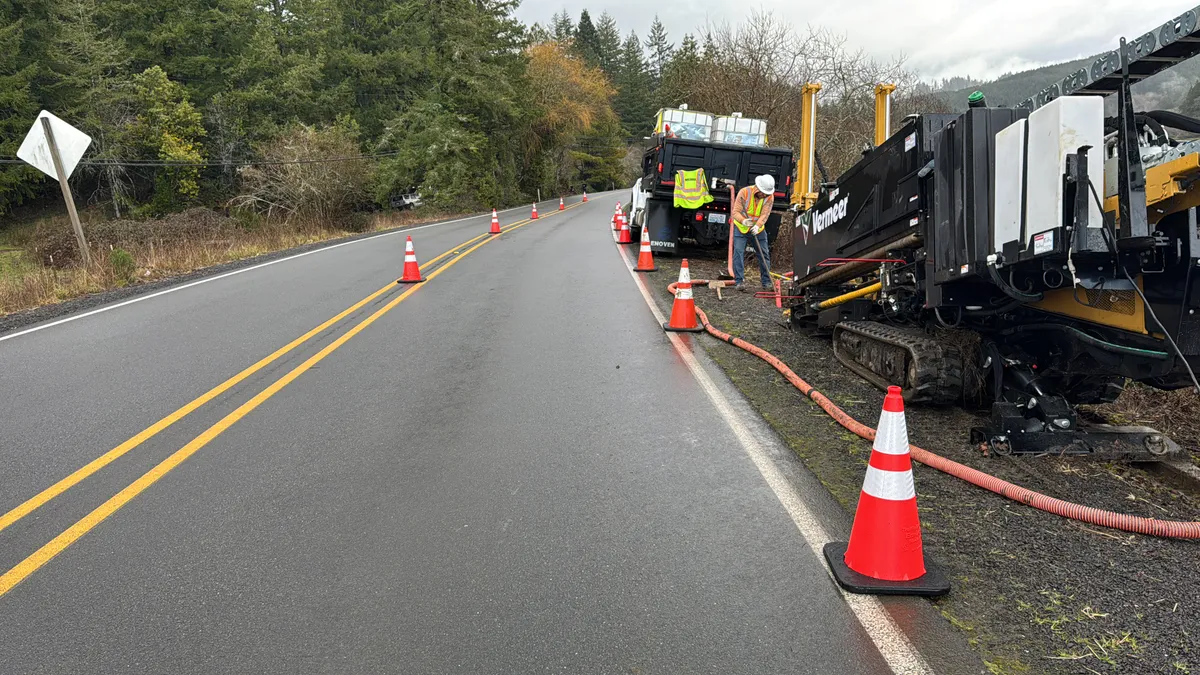
As extreme weather patterns become more frequent, municipalities and utilities are converting vulnerable aerial line networks to underground systems. Undergrounding telecom and electrical lines significantly reduces storm outages, line failure risks, and long-term maintenance costs.
Merra collaborates with municipal engineering departments to orchestrate phased utility undergrounding. The process involves excavating parallel trenches, installing heavy-duty PVC conduit systems, and positioning subterranean concrete vaults for transformers and splicing. The layout of these trenches must adhere to strict separation codes between high-voltage power conduits and low-voltage telecommunication microducts to prevent electromagnetic interference (EMI) and thermal damage. Typically, a minimum vertical and horizontal separation of 12 inches of compacted earth is required, or the conduits must be isolated via concrete encasements.
Our specialized equipment coordinates the trenching and conduit placement efficiently, ensuring street crossings are restored daily and utility disruption is kept near zero. Placing underground vaults requires detailed structural engineering, utilizing AASHTO H-20 load-rated concrete to handle heavy vehicle traffic overhead. Grounding halos made of bare copper conductors are installed around the perimeter of each vault, connected to deep-driven ground rods to ensure transient currents are dissipated safely. Water management is another critical factor; vaults are fitted with sump pits and gravity drains to prevent accumulation, which can degrade cable insulation and splicing enclosures over time.
Over the long term, undergrounding utilities offers municipalities a substantial return on investment. Cities see a drastic decrease in storm-related power outages, zero occurrences of wind-toppled poles, and improved urban aesthetics. This transition directly contributes to overall regional economic stability and safety, lowering emergency restoration expenditures and ensuring uninterrupted data and power connectivity for critical local infrastructure.
Related Resources
HDD Pre-Planning: Mitigating Subsurface Utility Risks
An in-depth look at subsurface utility engineering (SUE), geological surveys, and risk mapping before launching horizontal directional drilling operations.
Next-Gen Fiber Deployment: Overcoming Dense Urban Barriers
Key techniques and structural methodologies for deploying fiber backbone systems in highly populated urban grids with minimal community disruption.