Next-Gen Fiber Deployment: Overcoming Dense Urban Barriers
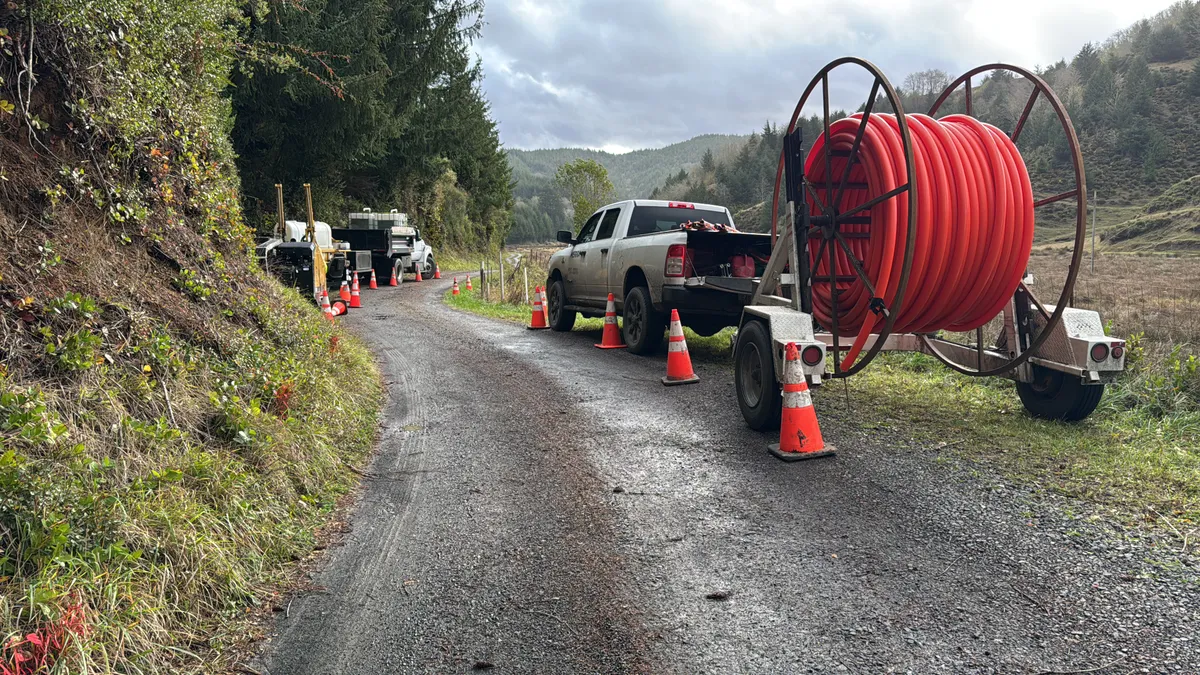
Deploying high-speed fiber backbone systems through dense urban areas requires a shift away from conventional excavation towards modern utility micro-trenching and smart horizontal boring. High traffic volumes, narrow municipal right-of-ways, and public disruption are key challenges for developers.
We use low-impact micro-trenching methodologies that cut narrow, shallow channels directly into asphalt to place microducts. This process utilizes a specialized tractor equipped with a heavy-duty rock wheel or diamond-edge saw blades. The saw cuts a clean channel that is only 0.75 to 2 inches wide and 8 to 18 inches deep, typically located at the joint between the asphalt road and the concrete gutter. This shallow depth avoids deep-buried water, gas, and power mains. Micro-trenching generates minimal spoils, which are immediately gathered by integrated vacuum recovery units. Once the microduct bundles are placed in the cut, the trench is backfilled with flowable cementitious grout or specialized polymer-modified concrete and capped with an elastomeric seal matching the roadbed.
For crossing major intersections and highways, precise directional boring operates underneath active traffic grids. Coupled with digital alignment trackers, our crews steer drill heads beneath active city assets to ensure zero structural displacement. The walkover tracking system utilizes a transmitter placed in the drill head that broadcasts depth, pitch, roll, and temperature to a hand-held receiver. This allows the operator to steer the bore head around sewer lines, telecommunication vaults, and building foundations with a clearance buffer of at least 24 inches.
Once the conduit networks are secured, pneumatic fiber blowing (jetting) is executed. Rather than pull fiber optic cables through the ducts using mechanical winches, which can exert high tensile stresses and micro-bend the glass fibers, we deploy high-velocity compressed air jetting. The jetting machine injects high-volume compressed air, generating an even drag force along the entire surface of the cable. This floats the cable through the microduct, permitting installations of up to 6,000 feet in a single run with near-zero tension. This level of field discipline keeps urban fiber rollouts on budget, protects the physical integrity of the glass core, and ensures maximum optical performance.
Related Resources
HDD Pre-Planning: Mitigating Subsurface Utility Risks
An in-depth look at subsurface utility engineering (SUE), geological surveys, and risk mapping before launching horizontal directional drilling operations.
Utility Undergrounding: Long-term Grid Resilience
Why municipalities are actively converting aerial power and telecom networks to underground vaults, and the financial & safety returns of grid hardening.